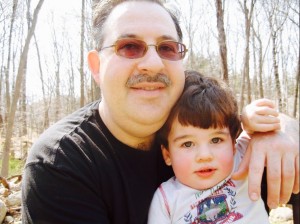
Conspiracy theorists say the Newtown massacre was staged. Lenny Pozner has made it his life’s work to protect the honor of his murdered son.
By Mike Spies Dec 12, 2017
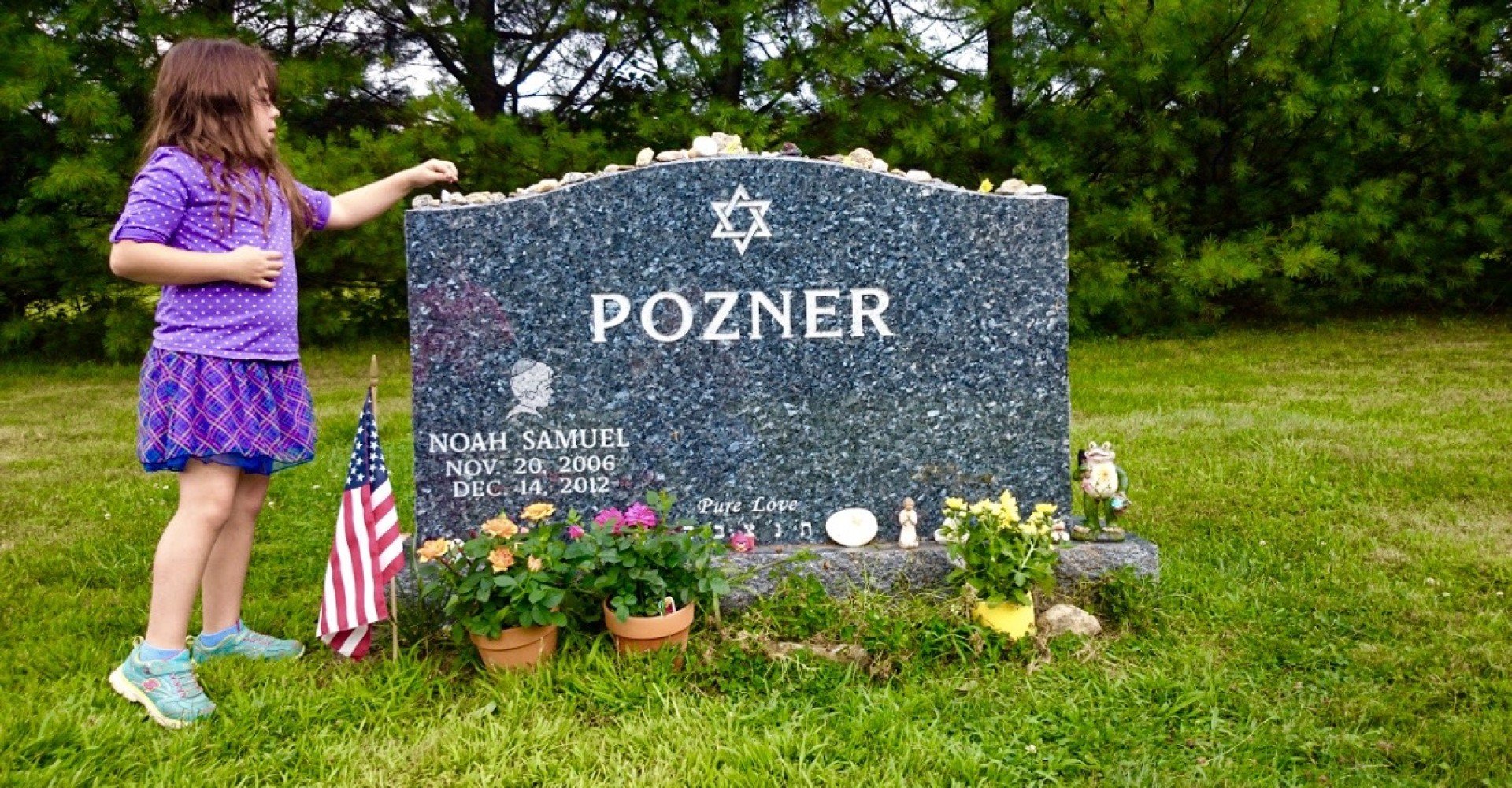
Our profile of Lenny Pozner was reported two years ago, during the lead-up to the third anniversary of the Newtown shooting. Since this article’s publication, his battle against the Sandy Hook hoaxers has produced some victories. Meanwhile, the major social media platforms have failed to halt new campaigns of harassment launched by conspiracy theorists against families who’ve lost loved ones during the gun massacres in San Bernardino, Orlando, Las Vegas, and elsewhere.
A year and a half after the mass shooting at Sandy Hook Elementary School in Newtown, Connecticut, Lenny Pozner called to set up a meeting with Wolfgang Halbig. A 68-year-old security consultant, Halbig was the de facto leader of a community of conspiracy theorists, known as hoaxers, who claimed that the shooting had been staged by the government. To the hoaxers, the 26 victims — one of whom was Pozner’s 6-year-old son, Noah — were fictional characters.
It was May 28, 2014, and Pozner, an IT consultant, was in Florida on business. He hoped to sit down with Halbig at a coffee shop near his home in Orlando, Florida. He wanted to talk to him face-to-face about Noah, his only son, who was never far from his mind. On December 14, 2012, the day of the shooting, Pozner had been the one to drop Noah off at school. As they drove, they listened to “Gangnam Style,” Noah’s favorite song. When they arrived, Pozner said, “Have a fun day,” and watched as his child headed inside, fiddling with his backpack and brown jacket.
Ever since his son’s death, Pozner had been dealing with the hoaxers. It was his habit to regularly post photos of Noah, a happy boy with soft blue eyes and a wide smile, on his Google+ page. He would put up pictures of Noah hugging his twin sister, or playing on the beach, or showing off the tooth he lost less than two weeks before he was murdered. The hoaxers would see these images and offer comments: “Where’s Noah going to die next?” read one. Another commenter, seemingly believing that Pozner had been recruited to help perpetuate the myth of the shooting, asked, “How much do you get paid?”
Pozner was one of the rare Sandy Hook parents who confronted those who questioned his child’s murder. In response to their comments, he posted online his son’s birth and death certificates. He shared the medical examiner’s report and one of Noah’s report cards. The hoaxers said the records were counterfeits.
Pozner remained undaunted. He thought that perhaps if he could show Halbig the documents in person, he and the rest of the hoaxers might at last relent. “I wanted to be as transparent as possible,” Pozner says. “I thought keeping the documents private would only feed the conspiracy.”
When Pozner did not receive a reply from Halbig, he contacted Kelley Watt, one of the more aggressive hoaxers who showed up on his Google Plus page. Watt wrote back on Halbig’s behalf. “Wolfgang does not wish to speak with you,” her note said, “unless you exhume Noah’s body and prove to the world you lost your son.”
Giving up on a meeting with Halbig, Pozner looked to engage in some sort of dialogue with the people who, around this time, made him their chief target. (One video montage that started making the rounds showed images of Noah set to a soundtrack of pornographic sounds.) In June 2014, Pozner accepted an invitation to join a private Facebook group called Sandy Hook Hoax. He told its members that he was willing to answer their questions. “I think I lasted all of eight minutes,” he recalls. One participant said, “Man, I’m gonna have to coach you up if you wanna go on TV and make money, Lenny.” Another typical attacker proclaimed, “Fuck your fake family, you piece of shit.”
Pozner eventually realized that, for Halbig and his brethren, this was a game without end. His efforts to combat them became a mission. “I’m going to have to protect Noah’s honor for the rest of my life,” he says.
An update from staff writer Mike Spies
One of the eeriest aspects of Lenny Pozner’s story is how it anticipated the current political climate. It seemed inconceivable, way back when I first met Pozner in 2015, that even the most committed conspiracy theorist could be so contemptuous of the truth and so flagrantly cruel to its adherents. Today, it can feel like objective reality is at constant risk of being swamped by the dark fantasies and manipulations of the fringe. “I kept saying, ‘They’re growing, they’re growing.’ I kept saying, ‘It’s like a brush fire that needs to be contained,’” Pozner recently told me. “Now, because it was ignored, it’s not on the edge; it’s dead center. It’s burned into the Capitol.”
Over the past two years, Pozner has not flinched from the fight that has become his life’s work. Days after our story first ran, a leading hoaxer whose actions Pozner had helped to expose was fired from his professorship at a Florida college. Another hoaxer who made death threats against Pozner has received prison time. Pozner shared his experiences in a lengthy 2016 New York magazine profile, risking further troll swarms as he accepted a higher public profile. He and the hundreds of volunteer online monitors he has organized have convinced YouTube and other web giants to remove hoaxer content. Their work has also directed scrutiny toward the corporate practices that facilitate the proliferation of vile conspiracy theories in the first place. He hopes one day to successfully lobby for a law designating the families of mass shootings as a protected class, which would make attacks on them a hate crime.